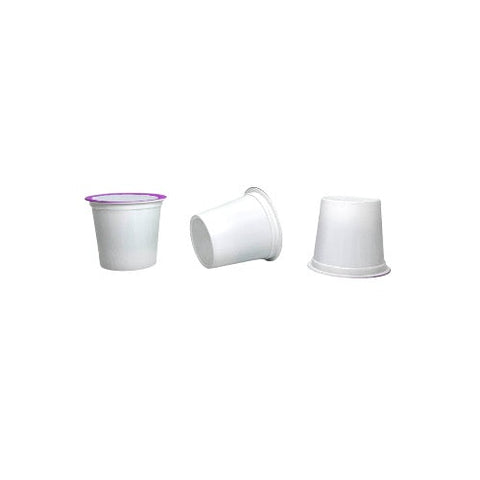
If you have ever bought a box of plain black tea in the US or Canada, there is a good chance the label said "orange pekoe." Many people expect a citrus taste and are surprised when there isn't one. Here is what the name really means, and how to get a classic black tea cup from a tea pod.
Orange pekoe is a grade, not a flavor
Orange pekoe (often shortened to OP) is a trade term for black tea made from whole leaves of a certain size. It describes the leaf, not the taste. There is no orange in it, and it is not a separate type of tea. In North America the name is also used loosely for any everyday black tea, which is why you see it on so many grocery store boxes.
Where the name comes from
Nobody knows for sure. "Pekoe" is usually traced to a Chinese dialect word for the fine white down on young tea buds. The "orange" part is less clear. One theory links it to the Dutch House of Orange, since Dutch traders sold a lot of tea in Europe. Another says it simply describes the coppery color of the leaves. Either way, it became a common label in Western tea shops more than a century ago.
How black tea grades work
Black tea leaves are sorted by size and by how whole they are. The most common terms you may see:
- OP (Orange Pekoe): whole, long leaves. The basic whole-leaf grade.
- FOP (Flowery Orange Pekoe) and TGFOP (Tippy Golden Flowery Orange Pekoe): whole leaves with more tips (young buds). Higher grades, often more delicate.
- BOP (Broken Orange Pekoe): broken pieces of leaf. They brew faster and give a stronger cup.
- Fannings and dust: the smallest pieces. They brew very quickly and are common in tea bags.
A grade tells you about leaf size and how whole the leaf is, not about flavor. Whole-leaf grades with more tips, such as FOP (Flowery Orange Pekoe), are often valued for a smoother, more rounded cup. These terms are used mostly for black tea, but some green teas are graded the same way.
What does orange pekoe taste like?
Since the name is used for so many everyday black teas, the taste is the classic one most people know: full-bodied, slightly malty, with no added flavors. It contains caffeine, like other black teas, and it takes milk, sugar or lemon well.
Getting that classic black tea cup from a pod
If you like plain black tea, you can make it in the coffee machine you already own. Pick the pods that match your machine:
- For Nespresso OriginalLine machines: Black Tea Pods or English Breakfast Tea Pods, or see all tea pods compatible with Nespresso OriginalLine.
- For K-Cup brewers: Assam Tea Pods or English Breakfast Tea Pods, or see all tea pods compatible with K-Cup brewers.
Flowery orange pekoe without the caffeine
Our decaf tea pods are made with flowery orange pekoe (FOP) leaf:


- Decaf Black Tea Pods compatible with Nespresso OriginalLine: flowery orange pekoe black tea, decaffeinated.
- Decaf Green Tea Pods compatible with Nespresso OriginalLine: flowery orange pekoe green tea, decaffeinated.
- Decaf Green Tea Pods compatible with K-Cup brewers: flowery orange pekoe green tea, decaffeinated.
In an OriginalLine machine, brew for about 30 to 45 seconds. A shorter run gives a stronger cup. For more tips, read how to make tea in a Nespresso OriginalLine machine or how to use K-Cup tea pods.
Quick answers
Is orange pekoe flavored with orange? No. It is plain black tea. The name refers to the leaf grade.
Is orange pekoe the same as English Breakfast? Not exactly. Orange pekoe describes leaf size. English Breakfast is a blend of black teas. Both give a classic, robust black tea cup.
Does orange pekoe have caffeine? Yes, unless it has been decaffeinated. Orange pekoe is black tea, so it naturally contains caffeine. For an evening cup, try our decaf black or decaf green tea pods above, or another decaf or herbal option.